Infoseek Analyzer end-->
+ MDGs
- UN World Summit - what about RH/R?
- Public Forum for UN Summit
+ SOWP
- Will promises be followed by action? SoWP 2005
- JOICFP shows SOWP to Japan
+ Safe motherhood
- Management meetings in Myanmar
- Recommendations from Vietnam project
+ PPS
- The spirit of Kunii
+ BCC
- Meeting NGO needs in RH and advocacy
- New RH seminar announced
+ Advocacy
- Bush holds back Congress funds to UNFPA
+ Japan
- MOFA continues support for international cooperation festival
- Japan's over-65s are "Top-of-the-Pops"
- Why the Pill?
+ HIV
- New steps in HIV/AIDS prevention
+ Population
- Survival in the 21st century
+ JOICFP Film
- Amena
- Latin American Way
-
TOP
Back numbers
JOICFP WEB Site
Outcomes of the JICA
Vietnam Reproductive Health Project Phase II

The JICA RH Project Phase II (September 2000 - August 2005) in Nghe An Province has been assessed by the Population Council, and the report concluded that the project produced more than expected. The JICA evaluation mission was dispatched in June 2005 and conducted a joint evaluation with Vietnamese counterparts, which also confirmed and endorsed the successful implementation of the project.


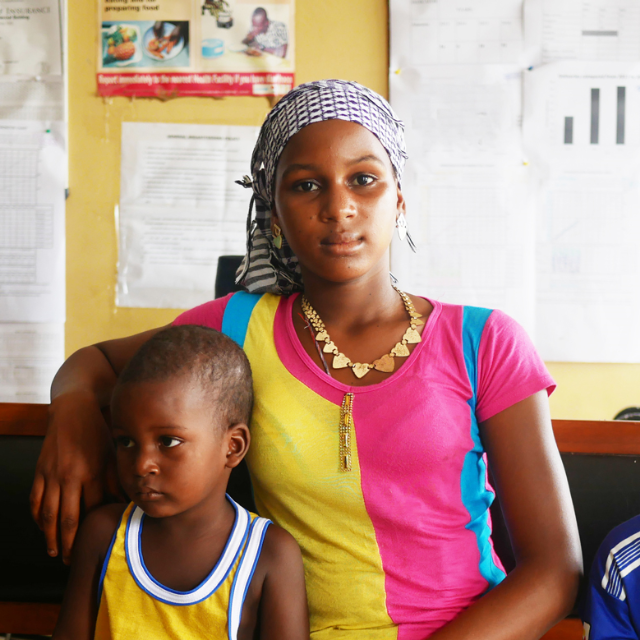
A mother with her new born child at the MCH Center

Lessons and recommendations from the field

1) Although the project focused on the commune level, close contact was maintained with the national level, i.e., the Reproductive Health Department, Ministry of Health. National health policies were followed, and the project provided feedback on concrete ways to implement these policies. For its part, the ministry gave strong support to the project.

2) An important factor in ensuring sustainable development after the project is strengthening the existing system and human resources to enhance regular functions and roles. The Vietnamese counterparts are proud that they worked without any personnel cost and are confident to continue vital activities after the end of the project.

3) Involvement of leaders of various agencies at all levels created a conducive environment to promote RH. In addition, out-reach IEC activities are necessary to further disseminate the project.


Involvement of men: the project organized various IEC sessions for commune people and invited representatives of various mass organizations in order to involve male leaders and gain support for the project activities at the grass root level

4) It is essential to identify and collaborate with organizations that have strong grassroots networks in order to better disseminate project outcomes. To date, the Women's Union has been a strong partner.


Health education for women:
Women are eager to learn new knowledge
and get new information.

5) Training and post-training support (supportive monitoring) are inseparable. It is not too much to say that the quality of post-training support determines the effects of the training.

6) Training has to be realistic, repeated and steady. This may seem basic, but in reality this point is surprisingly easily and often forgotten as most donors are in a hurry to see an outcome.


Commune Health Center (CHC) retraining:
a training session for CHC staff in charge of midwifery.
The project conducted 26 courses
throughout Phase I and II.
All the 469 CHCs in Nghe An Province
have midwifery staff trained by the project

7) The process of implementation is as important as the final outcome. Patience is also necessary for human resource development. When a donor is in haste to obtain outcomes with too much focus on efficiency, the activities become donor driven and the sense of ownership of counterparts reduced. An output-oriented approach does not necessarily ensure sustainability.

8) The merits of dispatching long-term experts should not be underestimated. The role of long-term experts is not merely to provide technical support. The advantages of a long-term stay in the field are, it enables:

  1. close communication and contact with counterparts
  2. involvement in the whole process of project implementation with the counterparts
  3. appreciation of the daily efforts and progress made by the counterparts
  4. understanding the difficulties that counterparts encounter and the reasons why certain activities are not implemented well
  5. appropriate timing of activities
  6. flexibility to meet changing conditions and needs, and knowing when and how to be flexible
  7. establishment of mutual confidence and trust by revealing the informal side of experts

9) Teamwork among the JICA experts is also essential. The trust and confidence among the experts is as important as the good relationship between the counterparts and experts.

10) It should be remembered that it is the counterparts who make the final decision and selection on what is useful for them, and that they are capable to do so.


At the final meeting for the provincial
and 19 district steering committee members
in August 2005.
The participants confirmed
that all are determined to continue utilizing knowledge
and skills accumulated through the RH Project