Infoseek Analyzer end-->
+ MDGs
- UN World Summit - what about RH/R?
- Public Forum for UN Summit
+ SOWP
- Will promises be followed by action? SoWP 2005
- JOICFP shows SOWP to Japan
+ Safe motherhood
- Management meetings in Myanmar
- Recommendations from Vietnam project
+ PPS
- The spirit of Kunii
+ BCC
- Meeting NGO needs in RH and advocacy
- New RH seminar announced
+ Advocacy
- Bush holds back Congress funds to UNFPA
+ Japan
- MOFA continues support for international cooperation festival
- Japan's over-65s are "Top-of-the-Pops"
- Why the Pill?
+ HIV
- New steps in HIV/AIDS prevention
+ Population
- Survival in the 21st century
+ JOICFP Film
- Amena
- Latin American Way
-
TOP
Back numbers
JOICFP WEB Site
New BCC Seminar to Tackle Myths and Taboos

Despite the ICPD Program of Action in 1994, reproductive health (RH) indices have shown little progress in many countries. Especially, the status of women's health is vulnerable to social barriers constructed around myths and taboos connected with RH.

Effective BCC (behavior change communication) that emotionally and knowledge-wise impacts target groups, and that is driven by the community is vital in achieving a good RH status in both women and men.

Drawing on its extensive experience in both BCC and community-operated programs, JOICFP is conducting a new training course, sponsored by the Japan International Cooperation Agency (JICA), entitled "Seminar on BCC Strategies for Reproductive Health (RH) Improvement."


Suitable BCC activities will cut across age groups
and interest all community members.
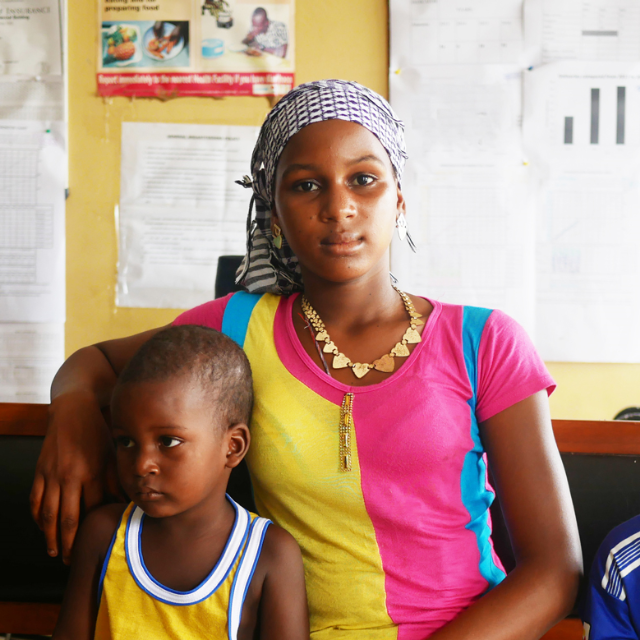
Here, a volunteer delivers education
on HIV/AIDS in Ghana

The course will run from 15th November to 7th December, and is open to organizations that are improving RH through community-operated BCC in the East Africa region. Two trainees, one each from a GO and NGO, will be invited from Kenya, Malawi, Tanzania, Uganda, and Zambia.

The new seminar is part of Japan's ODA toward Africa, and seminar components focus on BCC skills and approaches to as well as creation of supportive environments to tackle social barriers. The seminar includes field observations as well.

The seminar is expected to be held annually for five years until 2009. It has been suggested that it would be a good idea to network all seminar participants so that lessons learned could be correlated and shared with interested parties.