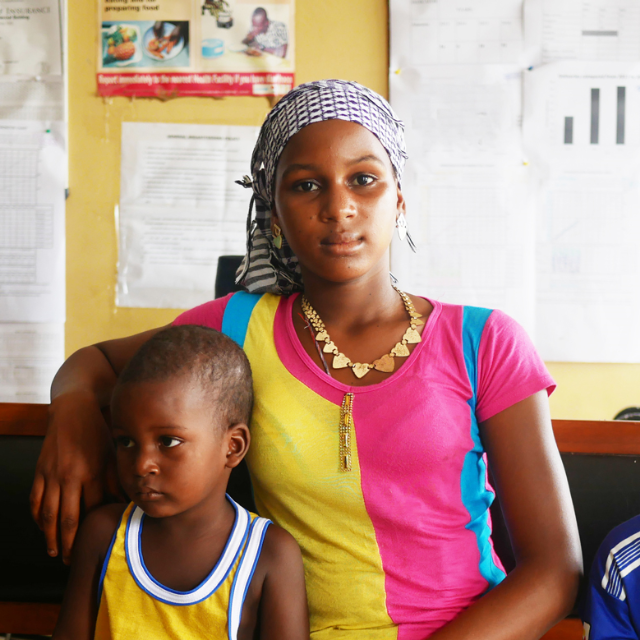
| For the protection
of Afghanistan's mothers and children |
| Every year in Afghanistan,
16,000 women lose their lives to pregnancy-related
complications and accidents; a figure that amounts
to one death every thirty-three minutes. Because they
have no chance to receive schooling, an overwhelming number
of Afghan women are unable to read and write. There is
a lack of knowledge and information regarding pregnancy
and delivery, thus many women do not receive the nutrition
and rest necessary during pregnancy. As health and examination
centers are close to nonexistent, most Afghan women do
not receive vital post-partum care after delivery. |
|
| Even in 1996, before civil war began
to ravage the countryside to the degree it has at present,
statistics revealed that for every 100,000 births,
1,700 mothers died, rendering Afghanistan the country
with the second highest maternal death rate in the world
at the time. According to research conducted by maternal
and child health centers in the eastern regions of Afghanistan,
this number has shot up to an overwhelming 2,380, leaving
Afghanistan with the highest maternal death rate in the
world. The primary cause for this lies in the prohibition
of family planning instigated by the Taliban regime. The
current maternal death rate of Afghanistan is 390 times
that of Japan. In light of these statistics, it is no
surprise that pregnancy and delivery are associated with
extreme risk for Afghan women. |
| In addition, one out of
four children die before they reach the age of five, and
for every 1,000 newborn infants, 257 die. Because
of this extremely high death rate, women often give birth
to as many children as possible in hopes that at least
some of them will survive. While it is not uncommon for
a woman to have up to ten children or more, with each
birth she faces the risk of death. In some cases, mothers
die in childbirth, leaving surviving infants and children
to face the impossible task of surviving on their own. |
 |
| Safe delivery kits for traditional
midwives for safe and sanitary home delivery |
|
| What can be accomplished in Afghanistan
with your assistance: |
a) 2,600 Japanese
yen
Presentation of one safe delivery
kit to a traditional midwife for safe and sanitary home
delivery. Each kit contains:
scissors for cutting umbilical cord; 2) brush to clean
hands, fingers, and fingernails; 3) antibacterial liquid
cleanser; 4) soap and soapdish 5) rubber gloves for delivery;
6) one small and one large towel; 7) forceps; 8) small
vacuum to rid a newborn's nose and mouth of amniotic fluid;
9) delivery assistance clothes; 10) fingernail clippers;
11) cotton; 12) razor for cutting the umbilical cord;
13) baby powder; 14) a water boiler; 15) a vinyl sheet
to spread under a woman's body or to lay a newborn baby
upon; 16) string to tie shut the umbilical cord; 17) a
stethoscope to monitor the baby's heartbeat.
b) 26,000 Japanese yen
Provision of training (twenty days)
for one traditional midwife to help reduce the maternal
and infant death rate. -or-Administration of activities
to raise awareness of the importance of proper nutrition
in villages.
c) 32,000 Japanese yen
Presentation of one cow to an orphaned
child to provide him/her with nutrition and income.
The Activity Plan |
|
|
|