UNFPA Facilitates GO-NGO Cooperation
in Emergency Situations
UNFPA now considers emergency response to be an essential
part of assistance in the transition phase from an emergency
to reconstruction.
On 30th and 31st October, representatives from 18 Japanese
NGOs, including umbrella organizations and JOICFP, took part
in a UNFPA and MOFA-supported workshop for training on emergency
response at UNU
Tokyo.
Eriko Hibi, Program Specialist, Humanitarian Response Unit,
UNFPA, spoke about strategies in implementing emergency relief,
emphasizing the need to take women's issues into consideration,
such as situating toilet and water facilities in safe areas.

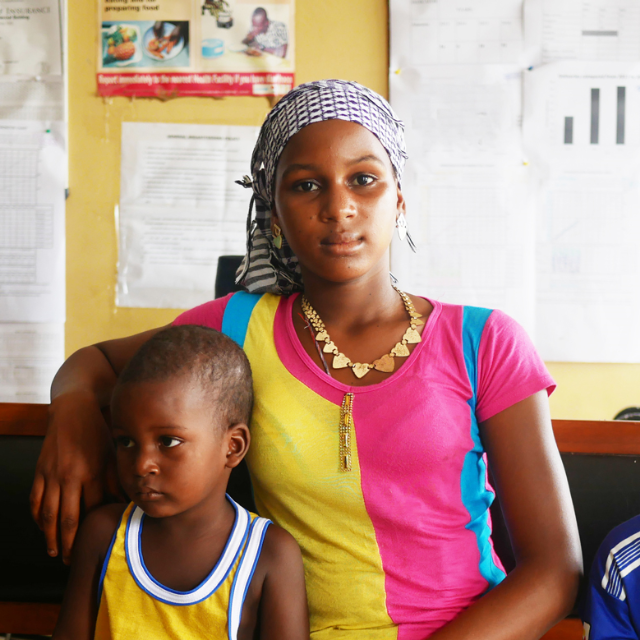
Security can be a real problem
when many people are living together like this
Reproductive health (RH) services, she said, need to be integrated
into health issues in emergency situations, and need to be
as sophisticated as possible. UNFPA has developed MISP
(Minimum Initial Service Package) for RH, and is training
trainers to disseminate it.
UNFPA, in line with other UN organizations, recognizes the
need for ready funds to be available for emergency situations,
rather than having to ask donors before relief can begin.
UNFPA also wants to develop stronger links with UN country
teams and NGOs for accurate data and information gathering,
and resources assessment, and is working with NGOs on capacity
development, promoting cooperation among NGOs, UN organizations,
and governmental organizations.

After the Asian tsunami in Bandah Aceh
Yasuhide Nakamura, Representative, HANDS, spoke about cooperation
with UNFPA, and gave an example from Afghanistan. He stressed
the need to "gather information first," especially
as the data NGOs can obtain is different than that gathered
by national organizations.

Gathering accurate data on people
like these living in a remote area
of Afghanistan is a job for NGOs
As an example, he showed how the ratio of men and women who
contribute to society through work in Afghanistan ranged from
2:1 to as high as 60:1 between areas, and that national data
could not reveal this.
NGOs, he said, also had a valuable role to play in resource
assessment for reconstruction.
|